Buying 500 acres of land is a major investment. Whether you're purchasing farmland, timberland, hunting property, or a large recreational tract, financing that much acreage is different from getting a traditional home mortgage.
Many banks are comfortable lending on houses and small parcels. But when you're buying hundreds or thousands of acres, finding the right financing can become more complicated.
The good news? There are lenders that specialize in large acreage land loans.
Here's what you should know before making an offer.
Why Financing 500 Acres of Land Is Different From Financing a Home
Most residential mortgage lenders focus on houses, not large tracts of land.
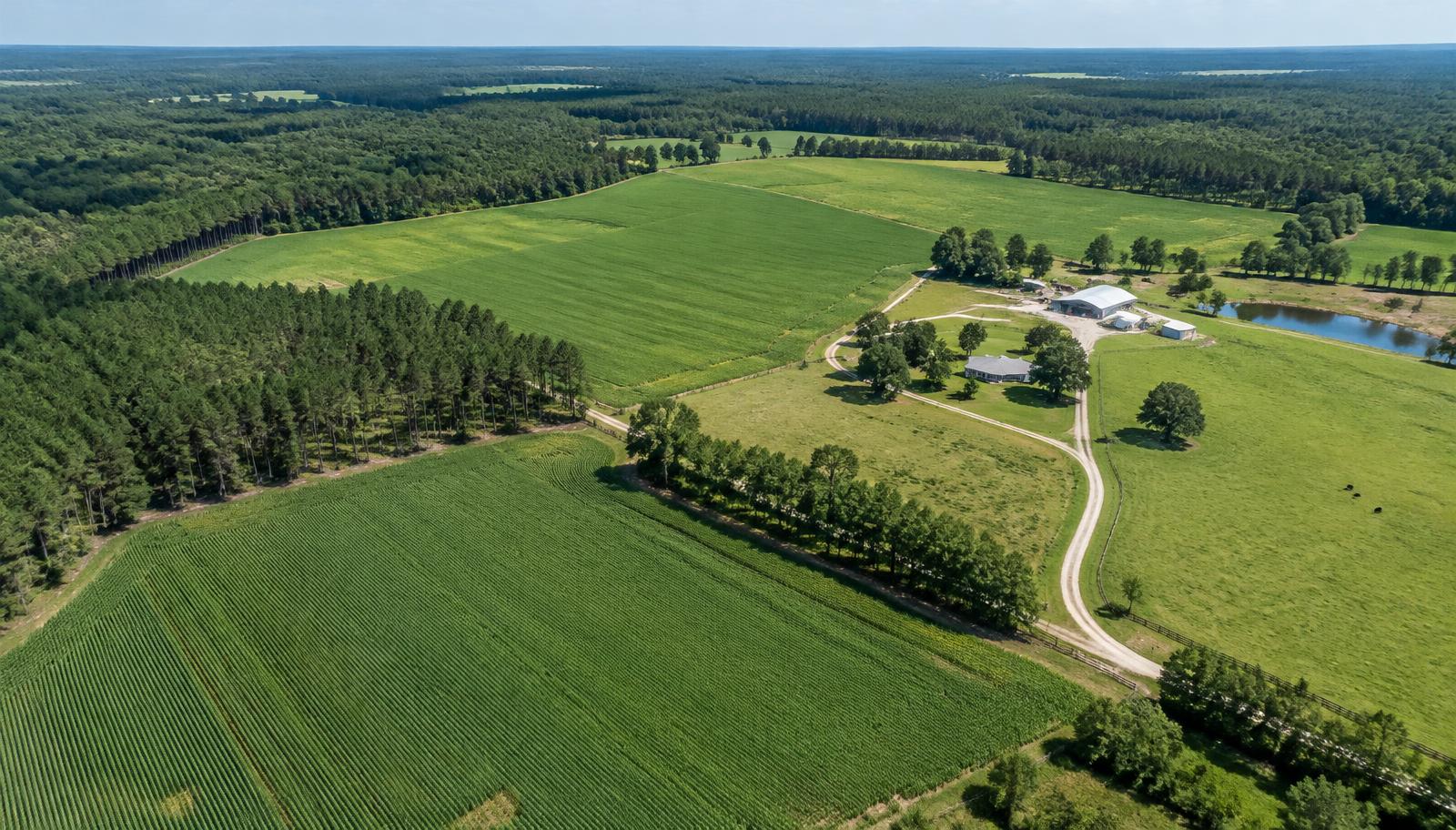
A 500-acre property may include:
- Agricultural fields
- Timberland
- Pasture and grazing land
- Hunting and recreational acreage
- Ponds, streams, and wetlands
- Farm buildings and equipment storage
- A residence or multiple structures
Each of these features can affect the property's value and financing options.
For example, a lender financing 500 acres of productive farmland may evaluate the property differently from one financing 500 acres of undeveloped timberland.
The intended use of the property matters just as much as its size.
How Much Down Payment Do You Need for 500 Acres?
One of the first questions buyers ask is how much money they'll need upfront.
There is no universal down payment requirement for large acreage loans.
Depending on the lender, property type, borrower qualifications, and loan program, some transactions may be considered with approximately 15%–35% equity or more.
These figures are illustrative, not guaranteed program requirements.
Here's an example of how different down payments affect a $2.5 million purchase.
- 15% down: $375,000 cash down; $2,125,000 loan.
- 20% down: $500,000 cash down; $2,000,000 loan.
- 25% down: $625,000 cash down; $1,875,000 loan.
- 30% down: $750,000 cash down; $1,750,000 loan.
A lower down payment isn't always the best option.
Sometimes contributing more equity can improve the loan structure, reduce payments, or provide additional financing flexibility.
Can You Use Land You Already Own as a Down Payment?
Potentially, yes.
If you already own land with substantial equity, a lender may consider that equity as additional collateral for a new purchase.
For example:
You own 200 acres valued at $1 million with no outstanding debt.
You want to purchase an additional 500 acres for $2.5 million.
Instead of contributing the entire required equity amount in cash, a lender might consider securing the financing with both properties.
This could reduce the cash needed at closing, depending on the loan structure and lender requirements.
However, pledging additional land puts that property at risk if the loan goes into default.
Not every lender allows this arrangement, and using additional collateral does not automatically eliminate down payment requirements.
What Types of Land Can You Finance?
Large acreage lenders may finance several property types.
Farmland
Properties used for growing crops, raising livestock, or other agricultural production.
Lenders may consider soil quality, historical productivity, water availability, and agricultural income.
Timberland
Land primarily used for growing and harvesting timber.
Financing may involve evaluating timber inventory, access, harvest potential, and underlying land value.
Hunting and Recreational Land
Large tracts purchased for hunting, outdoor recreation, or long-term ownership.
These properties may require different financing structures, especially when they don't generate regular income.
Investment Acreage
Land purchased for long-term appreciation, leasing, agricultural use, or other investment purposes.
The lender will typically consider both the property's characteristics and the borrower's ability to repay.
Mixed-Use Properties
Some large tracts contain farmland, timberland, recreational areas, and residential improvements.
These properties may require a more detailed appraisal and financing review.
How Do Lenders Determine the Value of 500 Acres?
The purchase price and appraised value aren't necessarily the same.
For larger land transactions, lenders commonly require an appraisal performed by a qualified appraiser with experience in the relevant property type.
An appraisal may consider:
- Recent comparable land sales
- Soil quality and agricultural productivity
- Timber value and marketability
- Road frontage and legal access
- Water resources and irrigation
- Easements and deed restrictions
- Improvements and buildings
- Wetlands and floodplain considerations
- Local land market conditions
Two properties with the same acreage can have very different values.
For example, 500 acres of irrigated cropland may have a much different per-acre value than 500 acres of cutover timberland.
Buyers should avoid assuming that every acre has the same value.
You can explore soil characteristics using the USDA Web Soil Survey.
What Financial Documents Will You Need?
Documentation requirements vary depending on the lender, borrower, and loan program.
For larger transactions, lenders may request:
- Personal financial statement
- Two or three years of federal income tax returns
- Current income and debt information
- Business financial statements, when applicable
- Details of existing real estate holdings
- Purchase agreement
- Property information and acreage maps
- Information about leases or property income
- Entity documents if purchasing through an LLC or partnership
Some programs offer streamlined documentation for qualifying borrowers, while others require a complete financial analysis.
A strong financial package can help reduce delays during underwriting.
Does the Property Have to Generate Income?
Not necessarily.
This is one of the biggest misunderstandings about large acreage financing.
Some lenders specialize in income-producing agricultural real estate.
Others may consider investment or recreational properties where repayment comes primarily from income outside the property.
For example, someone purchasing 600 acres of hunting land might qualify based on established business income, employment income, investment income, or other acceptable repayment sources.
The key question is:
Can the borrower demonstrate sufficient and reliable income to repay the loan?
Lenders also consider existing debts, liquidity, credit history, and overall financial strength.
Some agricultural loan programs have specific eligibility requirements regarding agricultural use or borrower income. A recreational or investment purchase should not be assumed eligible for every agricultural program.
What Loan Terms Are Available for Large Acreage?
Large acreage financing may offer longer repayment periods than conventional short-term commercial loans.
Depending on the lender and property type, available structures might include:
- Fixed interest rates
- Adjustable or variable interest rates
- Amortization periods of 15–30 years
- Balloon payment structures
- Fully amortizing loans
- Customized repayment schedules for qualifying agricultural borrowers
Not every structure is available for every transaction.
For agricultural borrowers, repayment schedules may sometimes be designed around seasonal or annual cash flow.
For recreational or investment land, traditional monthly payments may be more common.
Don't Compare Interest Rates Alone
When comparing financing proposals, consider:
- Interest rate
- Origination fees
- Appraisal costs
- Closing expenses
- Prepayment provisions
- Balloon maturity
- Amortization period
- Collateral requirements
A lower interest rate doesn't automatically mean a lower total borrowing cost.
Common Mistakes When Buying 500+ Acres
Making an Offer Before Discussing Financing
Large acreage loans can require specialized underwriting and appraisals.
Speaking with a financing professional before signing a purchase agreement can help you understand your options.
Overlooking Property Access
A large tract without adequate legal access can present serious financing and resale challenges.
Ignoring Easements and Restrictions
Conservation easements, utility easements, timber rights, mineral reservations, and other restrictions can affect property value and intended use.
Underestimating Closing Costs
Appraisals, surveys, environmental reviews, title work, legal fees, and loan origination fees can add to the total cash required.
Assuming Every Bank Finances Large Tracts
Many banks have lending limits, geographic restrictions, or property-type preferences.
A lender specializing in agricultural and rural real estate may be better suited to certain transactions.
Where Can You Find Financing for 500 Acres or More?
Potential financing sources include:
Agricultural banks: Banks with experience financing farms, ranches, and rural property.
Farmer Mac-related financing: Eligible agricultural real estate transactions may qualify through approved lenders and programs.
Specialty land lenders: Financing sources focused on agricultural, timber, recreational, and investment land.
Commercial lenders: Some banks and private lending institutions may consider large land purchases based on collateral and borrower strength.
You can learn more about agricultural secondary-market financing at Farmer Mac.
For government agricultural financing information, visit the USDA Farm Service Agency.
How Field Service Capital Can Help
At Field Service Capital, we focus on helping borrowers explore financing solutions for large rural property transactions.
Our areas of focus include:
- Agricultural real estate
- Timber tracts
- Investment acreage
- Agribusiness property
- Large land purchases and expansion
We work with borrowers pursuing financing requests generally starting at $250,000, including transactions involving several million dollars or more.
Our goal is to help you evaluate potential financing structures, understand documentation requirements, and navigate the lending process.
Whether you're purchasing 500 acres, 1,000 acres, or a much larger tract, understanding the financing options before making an offer can make a meaningful difference.
Financing is subject to lender approval, borrower eligibility, collateral evaluation, and applicable program requirements. Field Service Capital does not guarantee loan approval, rates, terms, or funding.
Final Thought
Buying 500 acres or more is a major financial decision, but the size of the property alone doesn't make financing impossible.
The right financing structure depends on the property, your financial situation, and how you plan to use the land.
Before you make an offer, understand your financing options.