Yes, you may be able to use land you already own as a down payment on more land. If you have enough equity in your existing property, some agricultural and rural land lenders may allow you to use that equity instead of bringing the full down payment in cash.
This strategy is often called cross-collateralization or using land equity to buy more land. It can help farmers, timberland owners, and rural property investors expand their holdings without selling property or using all their savings.
However, not every lender allows it, and owning valuable land does not automatically mean you will qualify for another loan.
Here's how it works, what lenders look for, and what you should know before using your existing land to purchase more acreage.
How Can You Use Land You Own as a Down Payment?
When you buy land, lenders usually require you to contribute a certain amount of equity toward the purchase.
For example, if you're buying a $500,000 farm and the lender will finance 75% of the purchase price, you would normally need $125,000 for the down payment.
But what if you already own 100 acres worth $300,000?
Instead of selling part of your property or withdrawing money from your savings, you may be able to pledge your existing land as additional collateral for the new loan.
The lender would then have two properties securing the financing:
- The new land you're purchasing.
- The land you already own.
By combining the value of both properties, you may be able to meet the lender's collateral requirements with less cash upfront.
Example: Buying 200 Acres Using Land You Already Own
Let's look at a simple example.
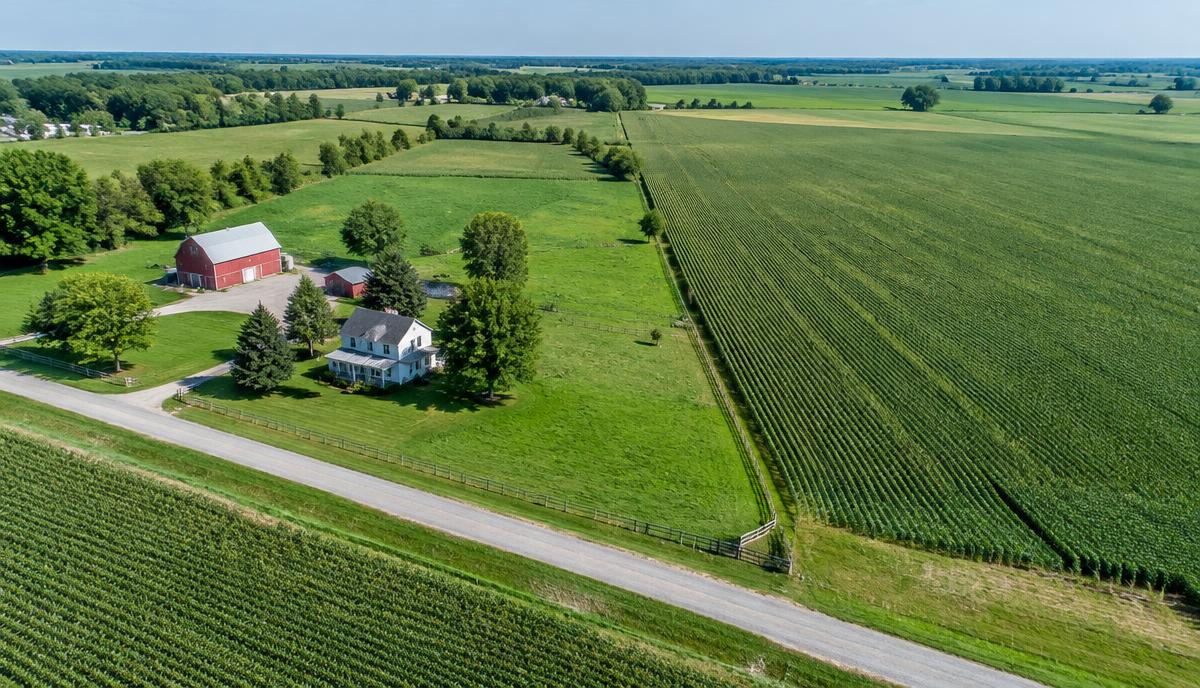
Suppose you own 100 acres of farmland free and clear. You've been offered an opportunity to purchase an adjoining 200-acre tract.
Here is what the transaction might look like:
- Value of land you already own: $300,000
- Purchase price of additional land: $600,000
- Combined property value: $900,000
- Requested new loan: $600,000
- Combined loan-to-value ratio: 66.7%
If the lender accepts both properties as collateral, your loan would represent approximately 66.7% of their combined value.
That could fit within the loan-to-value requirements of certain agricultural lenders.
Without the additional collateral, a lender limiting financing to 75% of the new property's value might require a $150,000 cash down payment.
By pledging the land you already own, you could potentially reduce or eliminate that cash requirement.
Of course, this example assumes the lender accepts both properties at the stated values, permits the structure, and approves the full loan amount.
Closing costs, appraisal expenses, lender fees, and other expenses may still require cash.
What If You Still Owe Money on Your Existing Land?
You don't necessarily have to own your current land free and clear.
You may still be able to use it as collateral if you have enough equity.
Land equity is the difference between what your property is worth and what you owe against it.
For example:
- Current land value: $500,000
- Existing mortgage balance: $150,000
- Your land equity: $350,000
In this example, you have $350,000 in land equity.
However, that doesn't mean a lender will allow you to borrow the full $350,000.
Lenders generally limit how much they will advance against the property's value. They also consider existing liens, repayment capacity, and whether another lender has a mortgage on the land.
If your existing lender has a first mortgage, a new lender may require refinancing, lien subordination, or another arrangement before accepting the property as additional collateral.
This is why it helps to speak with a lender experienced in large acreage financing.
How Much Land Equity Do You Need to Buy More Land?
There is no single equity requirement that applies to every agricultural land loan.
Many rural land lenders consider loan-to-value ratios when deciding how much they can finance.
Loan-to-value, or LTV, compares the total loan amount to the accepted value of the property securing it.
For example, a lender allowing a 75% LTV would generally limit the loan to 75% of the accepted collateral value.
Consider this example:
- Existing land value: $400,000
- Existing debt: $100,000
- New land purchase: $500,000
- Total debt after purchase: $600,000
- Combined property value: $900,000
Your combined LTV would be:
$600,000 ÷ $900,000 = 66.7%
That may provide enough collateral coverage for some lenders.
But remember, the lender must also determine whether you can afford the payments.
A low LTV does not automatically guarantee loan approval.
What Types of Land Can Be Used as Collateral?
Agricultural and rural land lenders may accept several types of property as additional collateral.
Farmland
Existing cropland, pastureland, and other agricultural real estate may be used to support the purchase of additional farmland.
This is common when farmers want to expand their operations by purchasing neighboring acreage.
Timberland
Timberland may also provide valuable collateral.
Depending on the property, a lender may consider both the underlying land and the value of standing timber.
A timber cruise or specialized appraisal may be required to determine the property's value.
Learn more in our Timberland Loan Guide.
Hunting and Recreational Land
Some lenders accept hunting properties, recreational acreage, and other rural investment tracts.
However, these properties may be evaluated differently from productive farmland.
The lender may consider road access, location, market demand, timber, improvements, and the property's potential resale value.
Vacant or Undeveloped Land
Even vacant land without buildings or income may qualify as collateral.
The key questions are whether the property has acceptable value, clear ownership, adequate access, and sufficient marketability.
Not every lender finances raw land, so choosing a lender familiar with rural real estate is important.
Do You Have to Use the Same Lender for Both Properties?
Not necessarily.
If you own your existing land free and clear, you may be able to pledge it to a lender financing the new purchase.
If the land already has a mortgage, the process can be more complicated.
Depending on the circumstances, you may have several options.
Option 1: Refinance both properties together
A new lender could potentially refinance your existing loan and provide financing for the new purchase under one loan structure.
Option 2: Use a separate loan against your existing land
You may be able to borrow against your current land and use those funds toward the new purchase.
This is sometimes called an equity loan or cash-out refinance.
Option 3: Pledge both properties to one lender
Some lenders may allow a single loan secured by multiple properties.
This arrangement is commonly called a blanket mortgage or cross-collateralized loan.
Each approach has advantages and disadvantages. The best choice depends on your existing loan terms, equity, income, and plans for the properties.
What Do Lenders Look at Besides Land Equity?
Having substantial equity is helpful, but it is only one part of qualifying for a loan.
Agricultural lenders typically consider several factors.
1. Your Ability to Repay the Loan
Lenders want to know how you will make the loan payments.
They may consider income from farming, employment, business operations, rental properties, investments, or other reliable sources.
If the new land will not generate income immediately, the lender may place greater importance on your existing income.
2. Your Credit History
Your credit history helps lenders understand how you've handled debt in the past.
A strong credit profile can improve your financing options, but credit requirements vary by lender and program.
3. The Value of Both Properties
The lender may require appraisals on both your existing land and the property you're buying.
The appraisals help determine whether the combined collateral supports the requested loan amount.
4. Your Existing Debt
Lenders review your current loans and other financial obligations.
Even with substantial land equity, excessive debt payments may make it difficult to qualify.
5. Your Available Cash
Lenders may also consider how much money you'll have available after closing.
Property taxes, repairs, operating expenses, and unexpected costs still need to be paid.
This is especially important when purchasing timberland or other property that may not produce regular income.
Can You Use Land Equity to Buy More Land Without Any Money Down?
Yes, it may be possible to buy additional land without a traditional cash down payment if the lender accepts your existing land as additional collateral.
However, zero cash down does not mean zero cost.
You may still need funds for:
- Property appraisals
- Title searches and title insurance
- Surveys
- Loan origination fees
- Recording fees and closing costs
- Property taxes and insurance
Some lenders may allow certain costs to be financed, subject to their guidelines.
Other lenders may require cash at closing even when you have substantial land equity.
The important distinction is that you may be able to replace some or all of the traditional down payment with existing collateral, but you should not assume every loan program allows this.
What Are the Risks of Using Existing Land as Collateral?
Using land equity can be a powerful financing tool, but it also creates risks.
The biggest concern is that you're putting property you already own at risk to finance another purchase.
If you default on the loan, the lender may have the right to foreclose on both properties, depending on the loan documents and applicable law.
There are other issues to consider.
Selling land may become more difficult. If both properties secure one loan, you may need lender approval before selling either tract.
You could lose financial flexibility. Land that was previously debt-free may become tied to a new mortgage.
Property values can change. If land values decline, refinancing or selling individual parcels may become more difficult.
Future borrowing may be affected. Property pledged as collateral may not be available to secure another loan without lender approval.
Before closing, ask whether the loan includes a partial release provision.
A partial release allows a lender to remove a specific parcel from the mortgage when certain conditions are met.
This can be especially important if you eventually plan to sell part of your acreage.
Is It Better to Use Land Equity or Make a Cash Down Payment?
That depends on your financial situation.
Using existing land equity may make sense when you have valuable property but prefer to keep cash available for other needs.
For example, a farmer might want to preserve working capital for seed, fertilizer, equipment repairs, or livestock expenses.
A timberland investor may want to keep funds available for road maintenance, planting, or future timber management.
On the other hand, a cash down payment may be preferable if you don't want to place additional property at risk.
Here is a simple comparison:
- Using Existing Land Equity: May preserve cash reserves. Making a Cash Down Payment: Reduces available cash.
- Using Existing Land Equity: May allow faster expansion. Making a Cash Down Payment: May require more savings.
- Using Existing Land Equity: Puts existing land at risk. Making a Cash Down Payment: May leave existing land unencumbered.
- Using Existing Land Equity: May require multiple appraisals. Making a Cash Down Payment: May involve simpler collateral.
- Using Existing Land Equity: Can complicate future property sales. Making a Cash Down Payment: May offer greater property flexibility.
Neither option is always better.
The right decision depends on your financial goals, risk tolerance, and the terms offered by the lender.
Can Farmer Mac or USDA Loans Help You Buy More Land?
Depending on the type of property and your qualifications, agricultural loan programs may provide additional financing options.
Farmer Mac Financing
Farmer Mac supports agricultural real estate financing through approved lenders and other eligible financial institutions.
These programs may be useful for qualifying agricultural property purchases and refinancing.
However, borrowers must meet applicable eligibility, collateral, credit, and repayment requirements.
Whether existing land can be pledged to reduce a cash down payment depends on the specific loan program and lender requirements.
You can learn more about Farmer Mac at FarmerMac.com.
USDA Farm Service Agency Loans
The USDA Farm Service Agency offers several farm ownership loan programs for eligible farmers and ranchers.
These programs may help qualified borrowers purchase or expand agricultural operations.
Some FSA programs have specific cash down payment requirements that cannot simply be replaced by pledging additional land.
For example, the FSA Direct Farm Ownership Down Payment Loan requires eligible applicants to contribute a minimum cash down payment of 5% of the purchase price.
Visit the USDA Farm Service Agency to learn more about current eligibility and financing options.
How to Get Started Using Your Land Equity
If you're thinking about purchasing more acreage, a little preparation can make the financing process easier.
Step 1: Estimate the value of your existing land.
Look at recent comparable sales and consider obtaining a professional appraisal.
Step 2: Determine how much you owe.
Find the current payoff amount on any loans secured by the property.
Step 3: Identify the land you want to purchase.
Gather the purchase price, acreage, location, and available property information.
Step 4: Review your income and debts.
Be prepared to provide financial statements, tax returns, and other information the lender may request.
Step 5: Speak with an agricultural land financing specialist.
Explain that you want to use existing land equity to support the purchase of additional property.
Ask whether the lender allows cross-collateralization and whether a cash down payment will still be required.
The Bottom Line: Your Existing Land May Help You Buy More
If you already own farmland, timberland, or other rural acreage, you may have more purchasing power than you realize.
Using land you already own as a down payment on more land can be an effective way to expand your property holdings while preserving cash.
The key is finding a lender that understands agricultural and rural real estate financing and is willing to consider your existing property as additional collateral.
Every transaction is different. Property values, existing debt, repayment ability, and loan structure all play a role.
Before committing to a purchase, make sure you understand both the benefits and the risks of pledging land you already own.
Explore Your Land Financing Options With Field Service Capital
At Field Service Capital, we help borrowers explore financing solutions for agricultural property, timberland, recreational acreage, and large rural land purchases.
Whether you're buying an adjoining farm, expanding a timberland investment, or purchasing hundreds of additional acres, our goal is to help you find financing that fits your property and financial objectives.
If you already own land and want to use its equity toward another purchase, we can help you evaluate potential financing structures and lender options.
Ready to expand your land holdings?
Request a Confidential Financing Review
Tell us about the land you own, the property you're interested in purchasing, and your financing needs.
Financing is subject to lender approval, property eligibility, credit review, collateral valuation, and applicable program requirements. Pledging additional collateral does not guarantee approval or eliminate all cash requirements.