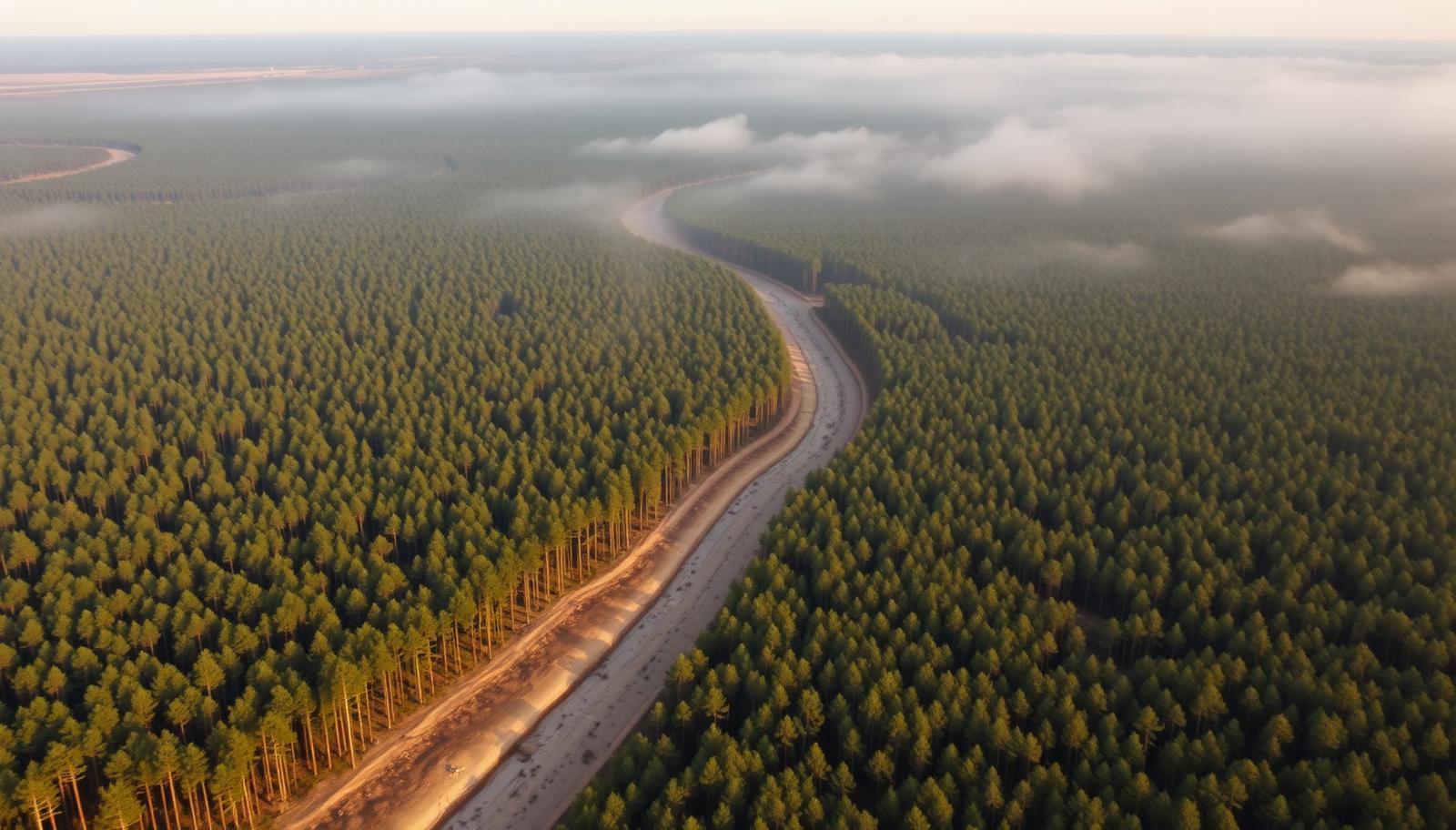
Large acreage loans can be one of the most effective ways to acquire timberland when the property is too large, too specialized, or too investment-oriented for a conventional residential mortgage. Whether you are buying 200 acres of planted pine, 1,000 acres of mixed hardwood, or several thousand acres as part of a long-term land strategy, the financing needs to reflect something traditional mortgage lending often misses: timberland is not simply vacant land. It is a productive asset with land value, growing inventory, potential income, and multiple possible sources of return.
A well-bought timber property can generate value in several ways at once. The trees grow. The land may appreciate. Timber can eventually be harvested. Hunting leases may generate income. Recreational demand can support resale value. And depending on location, the property may have future agricultural, conservation, residential, or development potential.
Why Timberland Requires a Different Kind of Loan
Consider two properties selling for $2 million. The first is a luxury home on five acres. The second is 700 acres of timberland containing mature and pre-merchantable pine, hardwood bottoms, internal roads, creek frontage, and established wildlife plots. Same price — entirely different assets from a lending perspective.
A residential lender evaluates a house, comparable home sales, borrower income, credit score, and conventional collateral. A lender evaluating timberland may need to understand:
- Soil productivity and timber species
- Timber age classes and merchantable volume
- Recent harvest activity
- Road access, internal roads, and topography
- Easements and surrounding land uses
- Recreational value and comparable land sales
- Future harvest schedules
This is why large timber properties often require lenders experienced with large land loans and agricultural real estate. The underwriting has to recognize both the land beneath the trees and the value represented by the timber growing on it.
Timberland Is More Than Dirt and Trees
An apartment complex depends heavily on rent. A retail property depends on tenants. Timberland has another component: the biological asset continues to grow. A well-managed stand can add volume over time — which doesn't mean timber prices always rise or that every timber property is a good investment. But the underlying trees may continue growing even while timber markets move through cycles.
That gives the owner options. A landowner may be able to delay a harvest when market conditions are weak rather than being forced to sell. That flexibility can be valuable — but it also creates unusual cash-flow patterns the lender needs to understand.
How Large Acreage Loans Fit a Timber Investment Strategy
Before approaching lenders, an investor should be able to answer a basic question: how do you expect this property to make money? The answer usually involves several components.
Timber growth
You may be acquiring younger timber with the expectation that it matures over the coming decade.
Timber harvests
The property may contain merchantable timber capable of producing income relatively soon.
Recreational leases
Hunting leases can provide supplemental annual revenue.
Land appreciation and parcel sales
Your primary strategy may be holding rural land where values are increasing. A larger tract could eventually be divided — subject to zoning, access, environmental considerations, and lender approval.
Conservation and personal recreation
Some buyers consider conservation easements as part of a broader land-management plan. Others purchase timberland partly because they want to hunt, fish, camp, or preserve property for their families. Many timber investments involve several of these objectives simultaneously, and the financing should account for that.
How Do Lenders Determine the Value of Timberland?
The appraisal is one of the most important parts of a timberland transaction. When financing a large tract, the appraiser may evaluate far more than acreage:
- Comparable timberland sales and location
- Access, road frontage, and internal road system
- Topography, soil quality, and water features
- Timber type, age, and condition
- Recreational characteristics
- Easements, development potential, and surrounding land uses
A property containing 1,000 acres of recently cut timber may be worth something very different from an otherwise similar 1,000-acre tract carrying substantial merchantable timber. Likewise, two properties with similar timber inventories can have dramatically different land values depending on location — a tract 20 minutes outside a growing metro has a different profile than remote acreage hours from a population center.
What Is a Timber Cruise?
A timber cruise is an inventory and evaluation of the timber growing on a property. A consulting forester samples the property and estimates species, diameter, height, volume, product classes, stand age, and timber condition. Depending on scope, the analysis may also estimate the value of merchantable timber.
Imagine two 500-acre properties both priced at $1.5 million. One carries $150,000 of merchantable timber. The other carries $600,000. The acreage is identical. The economics are not. Understanding timber inventory before purchasing can be just as important as understanding comparable land sales.
Can Timber Value Help You Get a Large Acreage Loan?
Potentially, yes. Merchantable timber can contribute to the overall value of the collateral. But borrowers should not assume a lender will add estimated timber value dollar-for-dollar to the loan amount. The lender will still consider the appraisal, loan-to-value, borrower equity, repayment capacity, timber management, harvest intentions, and marketability of the property.
Can You Harvest Timber While the Property Is Financed?
Usually this needs to be coordinated with the lender, because the trees may represent part of the lender's collateral. If a borrower buys a property with significant merchantable timber and immediately harvests most of it, the collateral could change substantially.
Loan documents may therefore contain provisions dealing with timber removal. A lender might permit harvesting under an approved forestry management plan; in other cases, some portion of harvest proceeds may be required to reduce the loan balance.
How Much Down Payment Is Needed for Timberland?
There is no universal answer. With large acreage loans, required equity is often based on the lender's acceptable loan-to-value ratio. On a $3,000,000 timber property financed at 65% of accepted collateral value, a simplified example looks like a $1,950,000 loan and $1,050,000 of borrower equity.
Actual transactions are more complicated. Required equity may depend on appraised value, purchase price, credit, liquidity, net worth, outside income, timber income, loan size, property location, and repayment structure. A financially strong investor with significant outside income presents a very different credit profile from a buyer relying on future harvests for nearly all repayment.
What If the Timberland Doesn't Produce Annual Income?
This is common. A mature property might generate a large harvest followed by several years with little timber revenue. Young planted timber may produce almost none for years. That doesn't automatically make the property unfinanceable — it means lenders need another reliable source of repayment, such as salary, business income, investment income, farm income, rental income, or distributions.
A lender may evaluate these as part of the borrower's global cash flow, essentially asking: if the timber doesn't generate cash this year, how will the loan payment be made?
Why Liquidity Matters for Timber Investors
Imagine buying a 1,000-acre timber property and putting nearly every available dollar into the down payment. On paper you own a valuable asset, but remaining liquidity is limited. Then come road repairs, property taxes, forestry expenses, replanting, site preparation, storm damage, insurance, or weak timber pricing.
A strong timber investment needs more than equity — it needs staying power. That is why lenders often consider post-closing liquidity when underwriting large rural properties. The question isn't only whether you can close; it's whether you can own the property through different market cycles.
A Timber Harvest Is Not Recurring Income
Suppose a property generates a $500,000 timber harvest this year. That doesn't mean it produces $500,000 in annual income — the next comparable harvest could be years away. An experienced timberland lender should distinguish between recurring operating cash flow and periodic liquidation of a biological asset. Both can be valuable, but they shouldn't always be treated the same way when determining repayment capacity.
Can Hunting Leases Help With Financing?
Yes, although impact depends on the size and reliability of the income. Landowners may lease hunting rights for deer, turkey, waterfowl, quail, or general recreation, and those leases can help offset carrying costs. But a lender may not treat $15,000 of annual lease income the same way it treats a large, stable source of outside income. It is one part of the picture.
Blanket Loans, Parcel Releases, and Rate Structure
Multiple parcels can sometimes be financed under a single blanket loan, which simplifies financing — but investors who expect future parcel sales should understand the lender's partial-release requirements before closing.
Timber is a long-duration asset; trees do not mature according to interest-rate cycles. If your strategy requires holding for 15 or 20 years, predictable debt service can be valuable. Other borrowers prefer adjustable structures because they expect to harvest, sell parcels, refinance, or sell the property. There is no universally correct structure — the loan should reflect the expected holding period.
Common Mistakes When Financing Timberland
- Assuming every acre has equal value — frontage, inventory, soils, wetlands, and access create major differences within one property
- Buying without a professional forestry evaluation of the timber
- Assuming irregular timber revenue will cover the loan payments
- Ignoring post-closing liquidity
- Choosing a lender based only on interest rate rather than structure
- Failing to discuss planned harvests with the lender
- Waiting until after signing the contract to arrange financing
Questions to Ask Before Buying Timberland
- What percentage of the purchase price represents land versus timber?
- How much of the timber is merchantable today?
- When are the next anticipated thinnings or harvests?
- What are annual property taxes and management costs?
- Does the property have legal and practical access, and what easements affect use?
- Is the property enrolled in any forestry or agricultural tax program?
- How will I make the loan payment if timber revenue is delayed?
- Do I expect to sell any parcels, and how long will I hold the property?
Timberland Financing Is Really About Time
A stock can be sold in seconds. A rental property may produce income every month. A timber stand may take decades to reach its intended harvest. Financing must respect that clock: enough time for trees to grow, enough liquidity to carry the property, enough flexibility to respond to timber markets, and enough patience for the investment thesis to develop. The wrong loan fights that timeline. The right loan supports it.
The Bottom Line
Large acreage loans can be an important tool for investors purchasing significant timber properties, but successful timberland financing requires more than finding someone willing to lend against acreage. The lender needs to understand the asset, the borrower needs to understand the timber, and the loan needs to fit the investment strategy — considering land value, timber inventory, harvest schedule, outside cash flow, liquidity, loan-to-value, management, recreational income, holding period, and parcel-release plans.
A 100-acre timber property may be primarily recreational. A 500-acre tract may combine hunting income with an active forestry plan. A 5,000-acre acquisition may operate more like an institutional investment. They are all timberland — but they shouldn't necessarily be financed the same way.
Considering a Timberland Investment?
Finding the right property is only one side of a successful acquisition. The other is building the capital structure around it. FieldService Capital works with qualified borrowers seeking financing for agricultural and rural real estate, including timberland, farms, ranches, recreational acreage, and other large land transactions. An early financing review can clarify potential loan structures, likely equity requirements, lender appetite, repayment considerations, and collateral issues — ideally before you sign a contract.
All financing is subject to lender underwriting, appraisal, property eligibility, credit approval and other requirements. FieldService Capital does not guarantee approval, rates, terms or funding. Timber values and investment returns can fluctuate. This article is for general educational purposes and is not financial, forestry, legal or tax advice.