When borrowers compare farm loan offers, the first number they usually look at is the interest rate. That makes sense. A 6.25% loan sounds better than a 6.75% loan. But the loan with the lowest rate is not always the loan that costs the least—or the one that makes the most sense for your farm, land purchase, or agribusiness.
Interest rate matters. It just isn't the only thing that matters. Origination fees, closing costs, amortization, balloon payments, prepayment penalties, collateral requirements, and even how the loan handles future changes can affect the true cost of borrowing. Before choosing a lender based on rate alone, it helps to look at the entire loan.
Why the Lowest Farm Loan Rate Can Be Misleading
Imagine you receive two offers for the same farm real estate loan.
Loan A
- Interest rate: 6.25%
- 20-year amortization
- 5-year balloon
- 1.5% origination fee
- Prepayment penalty
- Additional collateral required
Loan B
- Interest rate: 6.50%
- 20-year amortization
- Longer fixed-rate period
- 0.5% origination fee
- More flexible prepayment terms
- Only the purchased property is pledged as collateral
Which is cheaper? You cannot answer that question by looking at the interest rate alone. Loan A has the lower rate, but Loan B may offer lower upfront costs, greater flexibility, less collateral exposure, and a lower cost if you decide to refinance or pay the loan off early. That's why borrowers should compare the total loan structure, not just the advertised rate.
1. Start With the Interest Rate—But Don't Stop There
Interest is usually the largest financing expense, so the rate deserves serious attention. Even a small rate difference can add up on a large loan. For example, a 0.50% difference on a $2 million farm loan can represent a significant amount of money over time.
But borrowers also need to ask how long that rate is actually guaranteed. Is it fixed for the entire loan? Fixed for five years? Adjustable? Based on an index plus a spread? Subject to a rate reset? Fixed until a balloon payment is due? A low introductory rate may not be as attractive if it resets in a few years.
2. Compare Loan Fees
One of the biggest issues when looking at farm loan interest rate vs fees is that a lower rate may come with higher upfront costs. Common costs can include origination fees, loan processing fees, appraisal costs, environmental reports, legal fees, title work, recording fees, surveys, inspections, and third-party reports.
Consider a $1 million loan. A 1% origination fee equals $10,000. A 2% fee equals $20,000. If one lender offers a slightly lower rate but charges an additional $15,000 in fees, you need to determine how long it will take for the interest savings to recover that extra cost. This is sometimes called the break-even point. If you expect to refinance, sell the property, or pay down the loan before reaching that point, the lower-rate loan could actually cost you more.
3. Look at the Amortization Period
The amortization period determines how quickly principal is repaid. A longer amortization generally means a lower monthly or annual payment, but it can also mean paying more interest over the life of the loan.
For example, compare a 20-year amortization with higher payments and faster principal reduction against a 30-year amortization with lower payments and slower principal reduction. Neither structure is automatically better. A farm with seasonal cash flow may benefit from lower required payments. Another borrower may prefer faster debt reduction. The important thing is understanding what you are getting.
4. Don't Ignore the Balloon Payment
Many agricultural and commercial loans do not fully mature according to their amortization schedule. A lender might offer a loan amortized over 20 years but require the remaining balance to be paid or refinanced after five years. That's a balloon loan.
For example, with a 20-year amortization and a 5-year balloon, your payments may be calculated as though the loan lasts 20 years, but the remaining balance becomes due after year five. Most borrowers plan to refinance that balance. The risk is that nobody knows exactly what lending conditions will look like five years from now. Interest rates could be higher. Property values could fall. Your financial condition could change. Lending standards could tighten. A slightly higher rate today may be worthwhile if it gives you a loan structure that reduces future refinancing risk.
5. Check for Prepayment Penalties
This is one of the most overlooked parts of commercial and agricultural financing. Suppose you obtain a great rate today. Three years later, you sell part of the farm, receive an inheritance, have an unusually profitable year, or find an opportunity to refinance at better terms. Can you pay the loan down?
Maybe. Some loans include prepayment penalties or restrictions that make early payoff expensive. Depending on the loan, these provisions can be significant. Before signing, ask: Can I pay extra principal without penalty? Can I pay the loan off early? Does the prepayment penalty decline over time? Does the penalty apply if I sell the property? A loan with a slightly higher interest rate but flexible prepayment terms may ultimately save money.
6. Consider How Much Collateral You're Pledging
Cost isn't always measured in dollars. Collateral matters too. Imagine one lender offers a lower rate but wants liens on the farm being purchased, another farm you already own, equipment, and other business assets. Another lender offers a slightly higher rate but only requires the property being financed.
The first loan might be cheaper on paper. But you are putting substantially more of your assets behind the debt. That can also limit your ability to borrow against those assets later. For farmers and landowners with substantial equity, preserving unencumbered collateral can be valuable.
7. Look at the Payment Schedule
Agricultural income isn't always earned evenly throughout the year. A row-crop farmer, cattle producer, timberland owner, poultry grower, and commercial real estate investor can have very different cash-flow cycles. That's why payment frequency matters.
A loan could require monthly, quarterly, semiannual, or annual payments. A loan that matches debt payments with your normal income cycle may provide better cash-flow management even if another lender quotes a slightly lower rate.
8. Consider Future Flexibility
This is difficult to put into a spreadsheet, but it can be extremely important. Ask what happens if your plans change. For example, what if you want to sell 100 acres from a larger tract, subdivide property, build additional structures, add another farm, release collateral, make a large principal payment, refinance, or transfer property to another entity?
A loan that makes these actions difficult could become expensive later. The best loan is often the one that works not only for today's transaction but also for what you may want to do several years from now.
9. Compare the Total Dollars You'll Actually Pay
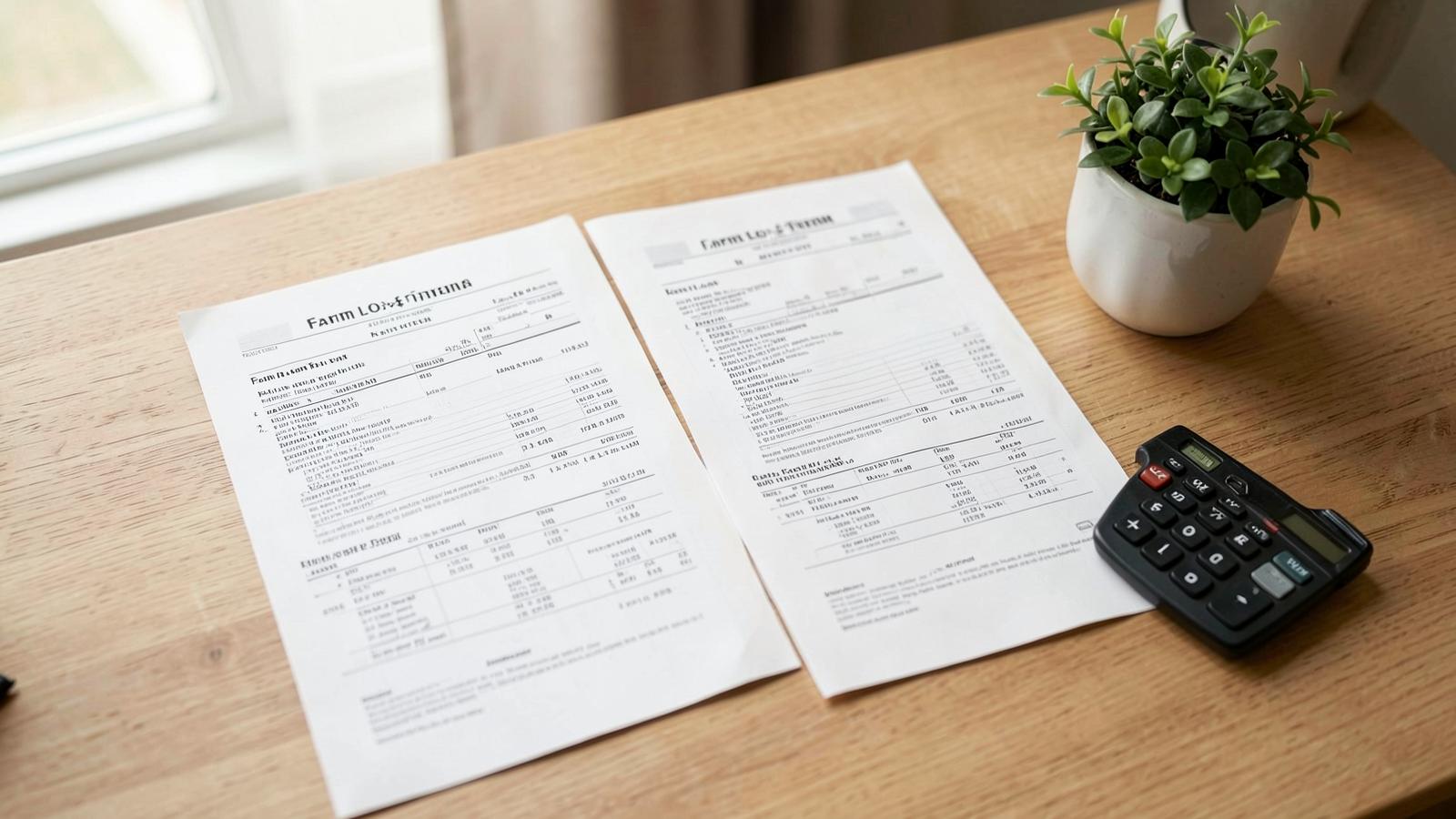
When possible, put competing loans side by side. Don't simply write down Lender A at 6.25% and Lender B at 6.50%. Instead, compare the complete picture.
A Half-Point Lower Rate Doesn't Automatically Mean a Better Deal
Borrowers sometimes spend weeks trying to save 0.25% or 0.50% on an interest rate while overlooking much larger differences elsewhere in the loan. That doesn't mean you should ignore rate. You shouldn't. Instead, calculate what that lower rate actually saves and compare the savings with any additional costs or restrictions.
For example, if the lower rate saves $4,000 per year but requires an additional $20,000 upfront, the break-even period is roughly five years before considering other differences. If you expect to refinance in three years, that "cheaper" rate may never become cheaper.
The Cheapest Loan Depends on Your Situation
There isn't one farm loan structure that is best for every borrower. A farmer buying neighboring acreage may have different priorities than an investor purchasing timberland. A family refinancing a farm that has been owned for generations may care more about long-term rate stability. An agribusiness financing a new facility may need flexibility during construction and expansion. A borrower planning to sell property within five years may care heavily about prepayment terms. That's why loan structure should match the purpose of the financing.
Questions to Ask Before Accepting a Farm or Land Loan
Before choosing a loan, make sure you can answer these questions:
- What is the interest rate?
- Is the rate fixed or adjustable?
- How long is the rate fixed?
- What are the total lender fees?
- What third-party closing costs should I expect?
- What is the amortization period?
- Is there a balloon payment?
- Are there prepayment penalties?
- What collateral is required?
- Can collateral be released later?
- How often are payments required?
- Can I make additional principal payments?
- What happens if I sell part of the property?
- Are there ongoing financial reporting requirements?
- What will the loan cost if I keep it for 3, 5, 10, or 20 years?
If you cannot answer these questions, you probably don't have enough information to properly compare the offers.
The Bottom Line
When you compare farm loan offers, don't automatically choose the lender quoting the lowest interest rate. Look at the entire financing package. A difference of a quarter or half percentage point matters, especially on a large agricultural loan. But fees, amortization, balloon payments, prepayment restrictions, collateral requirements, and loan flexibility can matter just as much.
The cheapest interest rate isn't always the cheapest loan. The goal should be to find financing that offers a competitive cost and fits your farm, property, cash flow, and long-term plans.
Looking for Farm, Land, or Agribusiness Financing?
FieldService Capital helps borrowers evaluate financing options for agricultural real estate, farms, ranches, timberland, rural properties, and agribusiness projects. Rather than focusing on one number, we look at the overall transaction—including loan size, collateral, cash flow, property type, repayment structure, and the borrower's long-term objectives.
This article is for general educational purposes and does not constitute a commitment to lend, financial advice, or a guarantee of loan terms. Rates, fees, eligibility requirements, and loan structures vary by lender, program, borrower, and transaction.