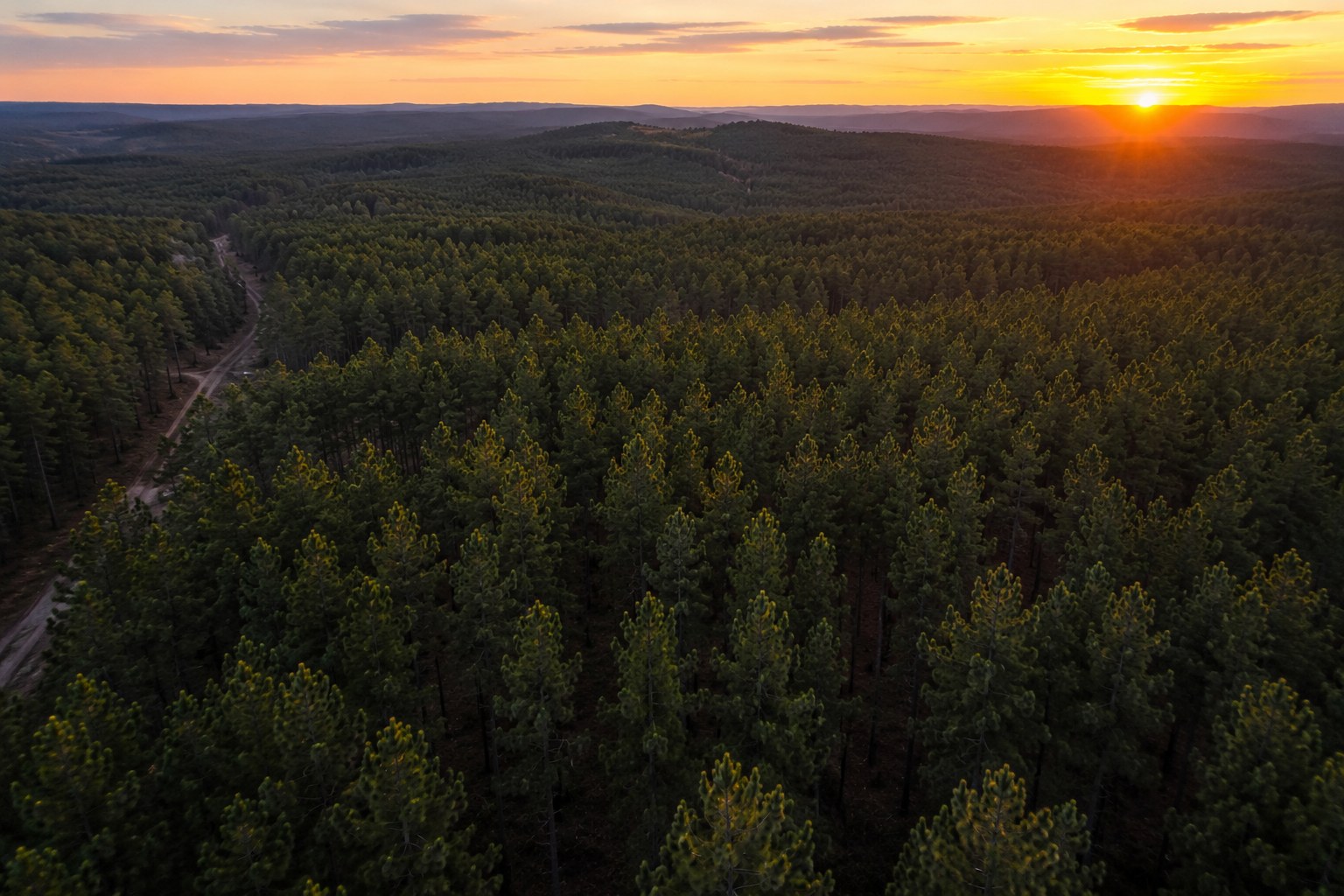
For generations, wealthy families, institutional investors, and experienced landowners have quietly invested in one asset that rarely dominates financial headlines: timberland.
While stocks experience volatility and commercial real estate cycles through booms and downturns, productive timberland continues to offer something many sophisticated investors value above all else — patience rewarded over time.
But with today's higher interest rates, persistent inflation concerns, and changing economic conditions, an important question remains: is timberland investment still one of America's best inflation hedges?
For many investors, the answer remains yes — but understanding why requires looking beyond the trees themselves.
Why Timberland Has Historically Performed Well During Inflation
Inflation quietly reduces the purchasing power of cash. What buys $100 today may cost considerably more a decade from now. Real assets have historically provided protection because their value often rises alongside inflation.
Timberland possesses several characteristics that make it unique:
- It produces a tangible commodity with ongoing demand.
- Productive acreage is finite.
- Trees continue growing regardless of daily market conditions.
- Harvest timing can often be adjusted to market conditions rather than forced by a maturity date.
Unlike many investments, timberland is not simply waiting for market appreciation. It is actively growing.
Biological Growth: The Advantage Few Investments Can Match
Perhaps the greatest strength of timberland investment is something economists call biological growth. Simply put: every year your trees grow larger.
That growth generally means additional merchantable timber volume, increasing the property's productive capacity over time. Unlike an apartment building that requires continual maintenance simply to preserve its value, a well-managed timber property is naturally adding potential value as the trees mature.
Timber Appreciation Isn't Just About Lumber Prices
Many new investors mistakenly believe timberland values depend entirely on lumber markets. In reality, several factors influence appreciation:
- Biological timber growth
- Regional demand for timber products
- Land scarcity
- Recreational value
- Development potential
- Hunting opportunities
- Carbon and conservation opportunities in some markets
- Improvements such as roads and access
High-quality timberland often derives value from multiple sources simultaneously. This diversification is one reason sophisticated investors continue allocating capital to the sector. Industry benchmarks such as the NCREIF Timberland Index have long tracked the sector's long-term risk-adjusted performance.
A Long-Term Investment That Rewards Patience
Timberland is rarely a "get rich quick" investment. Instead, it has historically appealed to investors focused on preserving and steadily growing wealth over decades.
Unlike publicly traded securities that may fluctuate significantly from one day to the next, timberland is generally valued based on long-term productivity rather than short-term market sentiment. Many investors appreciate that they can:
- Delay harvesting during weaker markets when practical
- Harvest when pricing becomes more attractive
- Continue benefiting from biological growth while waiting
That flexibility is uncommon among traditional investments.
Why Wealthy Families Continue Investing in Timberland
Many affluent families view timberland as more than a financial asset. It can become part of a family's long-term legacy. Timber properties are often held for generations because they offer benefits beyond financial returns:
- Wealth preservation
- Portfolio diversification
- Recreational opportunities
- Wildlife habitat
- Family retreats
- Potential income from timber harvests
- Long-term appreciation
Many investors appreciate owning an asset they can enjoy while it continues working for future generations.
Estate Planning Advantages
For many families, timberland fits naturally into broader estate planning strategies. Ownership is frequently structured through family LLCs, trusts, limited partnerships, or multi-generational ownership entities. These structures may help simplify management and succession planning, depending on a family's objectives and professional advice.
While every situation is different, many families view timberland as an asset capable of transferring both financial value and family traditions to future generations. Always consult qualified legal and tax professionals regarding estate planning decisions.
Why Financing Can Make Sense — Even for Wealthy Buyers
One common misconception is that affluent investors always purchase land with cash. In reality, many sophisticated buyers deliberately use financing — even when they could pay cash. Why? Because preserving liquidity creates flexibility.
Instead of committing all available capital to one purchase, financing may allow an investor to:
- Acquire additional acreage
- Diversify investments
- Maintain cash reserves for future opportunities
- Fund property improvements
- Preserve capital for business or investment opportunities
Responsible leverage can become a valuable financial tool when matched with an investor's overall strategy and risk tolerance. Purpose-built timberland investment loans and broader agricultural land financing are designed for exactly this use case.
The Role of Leverage in Building a Larger Land Portfolio
Imagine two investors with the same amount of available capital. One purchases a single property using all available cash. The other finances a portion of the purchase and preserves capital for future acquisitions or improvements.
While every situation is unique, strategic financing may allow investors to:
- Build larger land holdings over time
- Improve portfolio diversification
- Capture future opportunities without liquidating other investments
- Keep working capital available
For experienced investors, financing is often viewed as a strategic decision — not simply a necessity.
Is Now Still a Good Time to Invest in Timberland?
No one can predict future markets with certainty. However, many of the long-term fundamentals that have attracted timberland investors remain in place:
- Productive timberland is a finite resource.
- Wood products remain essential across many industries.
- Well-managed forests continue growing regardless of market cycles.
- Long-term ownership can provide both income potential and appreciation.
- Land ownership has historically appealed to investors seeking tangible assets.
Successful timberland investing continues to require careful due diligence, quality property selection, professional forest management, and a long-term perspective. Resources from the USDA Forest Service and the National Association of State Foresters can be helpful starting points for research.
Final Thoughts
Markets change. Interest rates rise and fall. Inflation comes and goes.
Yet throughout decades of economic cycles, productive timberland has remained an asset class that many sophisticated investors continue to evaluate for its combination of biological growth, tangible value, and long-term appreciation potential.
Whether your objective is preserving wealth, expanding a land portfolio, diversifying investments, or creating a multi-generational legacy, financing can play an important role in helping you achieve those goals while preserving valuable capital for future opportunities.
Considering a Timberland Investment?
At Field Service Capital, we help investors, landowners, and agricultural businesses explore financing solutions for productive rural real estate — including timber tract loans, land loans, and timberland acquisitions and refinances.
Whether you're purchasing your first timber investment or expanding an existing portfolio, we're happy to discuss financing strategies designed around your investment goals. Contact us to start the conversation and discover how strategic financing may help you acquire more land while preserving your investment capital.