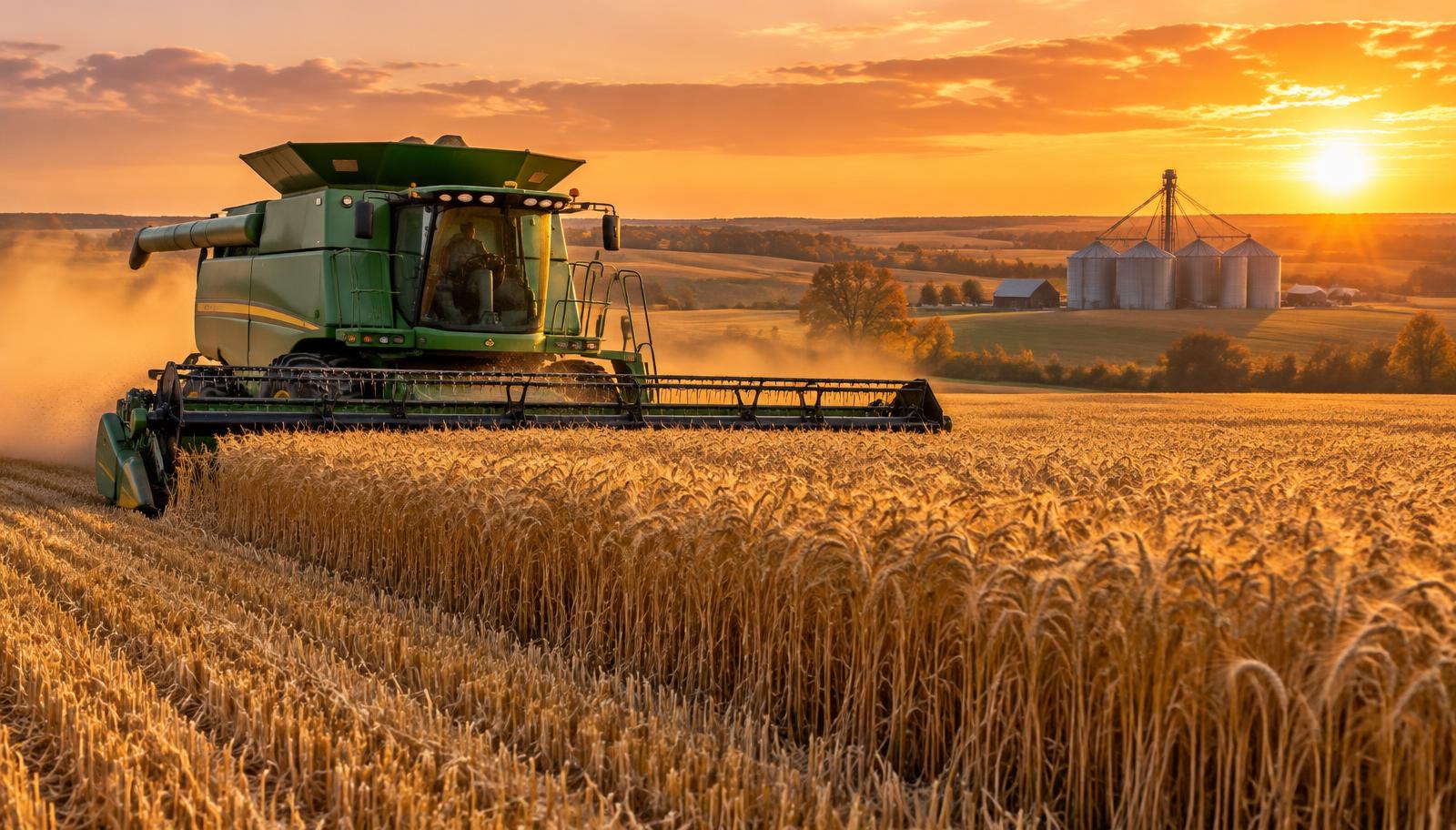
Eight billion dollars is a big headline. But if you're paying harvest bills, two questions matter most: How much could my farm receive—and when?
USDA has announced the Harvest Fuel Relief program for 2026, a new round of one-time payments meant to help farmers facing higher costs and market disruptions.
The announcement offers welcome news for producers under pressure. However, payment rates, full eligibility rules, and payment timing still need more detail.
Here is what USDA has announced, what remains unknown, and how you can prepare.
What Is the Harvest Fuel Relief Program?
The Harvest Fuel Relief program, or HFR, is an $8 billion USDA assistance program designed to cover part of farmers' estimated losses for the 2026 crop year.
President Donald Trump and Agriculture Secretary Brooke Rollins announced the program on October 19, 2026.
The Farm Service Agency, known as FSA, will manage the payments. Funding is authorized through the Commodity Credit Corporation Charter Act.
According to the official USDA announcement, the program will use a standard formula based on acreage, production costs, crop yields, and prices.
Harvest Fuel Relief at a Glance
- How much funding is available? $8 billion nationwide
- What crop year does it address? 2026
- Who will administer it? USDA's Farm Service Agency
- How will payments be calculated? A uniform formula using acreage and estimated costs, yields, and prices
- When will crop payment rates be released? November 2026 for Title I commodities
- Is crop insurance required? USDA says crop insurance linkage will not be required
- Can farmers apply now? The October 19 release does not announce an open application period
- When will payments arrive? The release does not provide a firm payment date
How Will USDA Calculate Farmer Relief Payments?
USDA plans to use three main sources of information:
- Planted acres reported to FSA
- Production cost estimates from USDA's Economic Research Service
- Yield and price estimates from USDA's World Agricultural Supply and Demand Estimates reports
In plain English, USDA will use a formula to estimate losses and provide support for part of those losses.
That means the announcement does not describe a dollar-for-dollar refund of every farm's diesel bill.
It also does not promise that every producer will receive the same payment.
How Much Will My Farm Receive?
There is not enough information in the announcement to calculate a reliable payment for an individual farm.
USDA says it will release commodity-specific rates for Title I commodities in November. Other details may also affect the final amount.
Who Could Qualify for Harvest Fuel Relief?
The announcement addresses Title I commodities and other eligible commodities. Title I is a farm bill category tied to commodity support programs.
However, the release does not provide a complete HFR eligibility checklist.
Farmers still need guidance on matters such as:
- Which crops and production activities qualify
- Any payment limits
- Any income limits
- Required forms and certifications
- Application deadlines
Do not assume that receiving assistance through another USDA program automatically qualifies your operation for HFR.
What About Specialty Crop Growers and Fishermen?
USDA specifically invites producers of non-Title I commodities, including specialty crop growers and fishermen, to submit information about higher fuel costs.
That information can be sent to HarvestFuel@usda.gov.
USDA says it will consider the data when setting payment rates. The payment method for other eligible commodities will be announced later.
When Can Farmers Apply—and When Will Checks Arrive?
The October 19 USDA release encourages eligible producers to prepare for a future application period. It does not give a firm opening date or payment date.
Michigan Farm Bureau's Farm News Media reported on October 20 that pre-filled applications for Title I commodities would be available in January 2027. That timing is not stated in the USDA release.
For now, confirm the schedule with FSA before relying on a payment to cover a bill coming due.
How to Prepare for Harvest Fuel Relief
You can take useful steps while waiting for final instructions.
1. Set Up Your Login.gov Account
USDA encourages eligible producers to create a Login.gov account before the application period is announced.
The agency says pre-filled online applications will be available to producers whose accounts are linked to USDA. If you already have an account, check that you can sign in.
2. Review Your FSA Acreage Records
Reported planted acres will be part of the payment formula.
Ask your FSA office whether your 2026 acreage records are complete and whether any corrections are needed.
3. Keep Cost Records Organized
Keep fuel invoices, production expense records, and other supporting documents together.
The announcement does not establish a receipt-based reimbursement process. Still, organized records can help you respond if USDA requests more information.
4. Watch for Official Instructions
Monitor USDA and FSA updates for payment rates, eligibility rules, and application deadlines. Use Farmers.gov to find USDA resources and assistance.
5. Review Your Cash Needs Before the Next Payment Is Due
List your upcoming expenses and debt payments. Then compare them with cash you expect from crop sales and other confirmed sources.
Keep unapproved relief payments separate from money you know will be available.
Is Crop Insurance Required?
However, USDA still encourages producers to use available risk management tools.
A one-time relief payment should not be treated as a replacement for a longer-term plan to manage weather, production, and price risks.
How Should Farmers Think About This Payment?
A relief payment could provide breathing room. The next question is whether it addresses a short-term cash shortage or only delays a larger problem.
As a planning exercise, ask:
- Will expected crop income cover this year's operating expenses?
- How much operating debt will remain after harvest?
- Are large loan payments due before crop income arrives?
- Would the farm still meet its obligations without one-time assistance?
- What changes would make next year's cash flow stronger?
These questions help separate a difficult season from a debt structure that needs closer review.
For example, a farm may have valuable land but limited cash available for current bills. That situation deserves a careful look at repayment capacity, collateral, and loan terms.
A lower payment alone does not tell the whole story. Longer repayment terms may increase total interest costs, and securing more debt with farmland puts that property at risk.
Does Harvest Fuel Relief Replace Other USDA Payments?
The USDA announcement presents HFR as an additional relief program alongside earlier assistance.
It references Farmer Bridge Assistance payments and payments under Agriculture Risk Coverage and Price Loss Coverage.
However, farmers should wait for final HFR rules before making assumptions about how participation in other programs will affect their eligibility or payment.
Put a Financing Plan Behind the Relief
If harvest costs, upcoming loan payments, or expansion plans have you reviewing your options, Field Service Capital can help you explore agricultural and rural financing through its capital relationships.
We work with borrowers seeking financing for:
- Farm and agricultural property purchases
- Refinancing existing agricultural real estate debt
- Timberland and investment tracts
- Agribusiness facilities and expansion
- Qualifying business needs secured by real estate
Explore Field Service Capital's agricultural financing solutions, with financing opportunities starting at $250,000, subject to lender requirements.
Contact Field Service Capital for a confidential review of your financing needs.