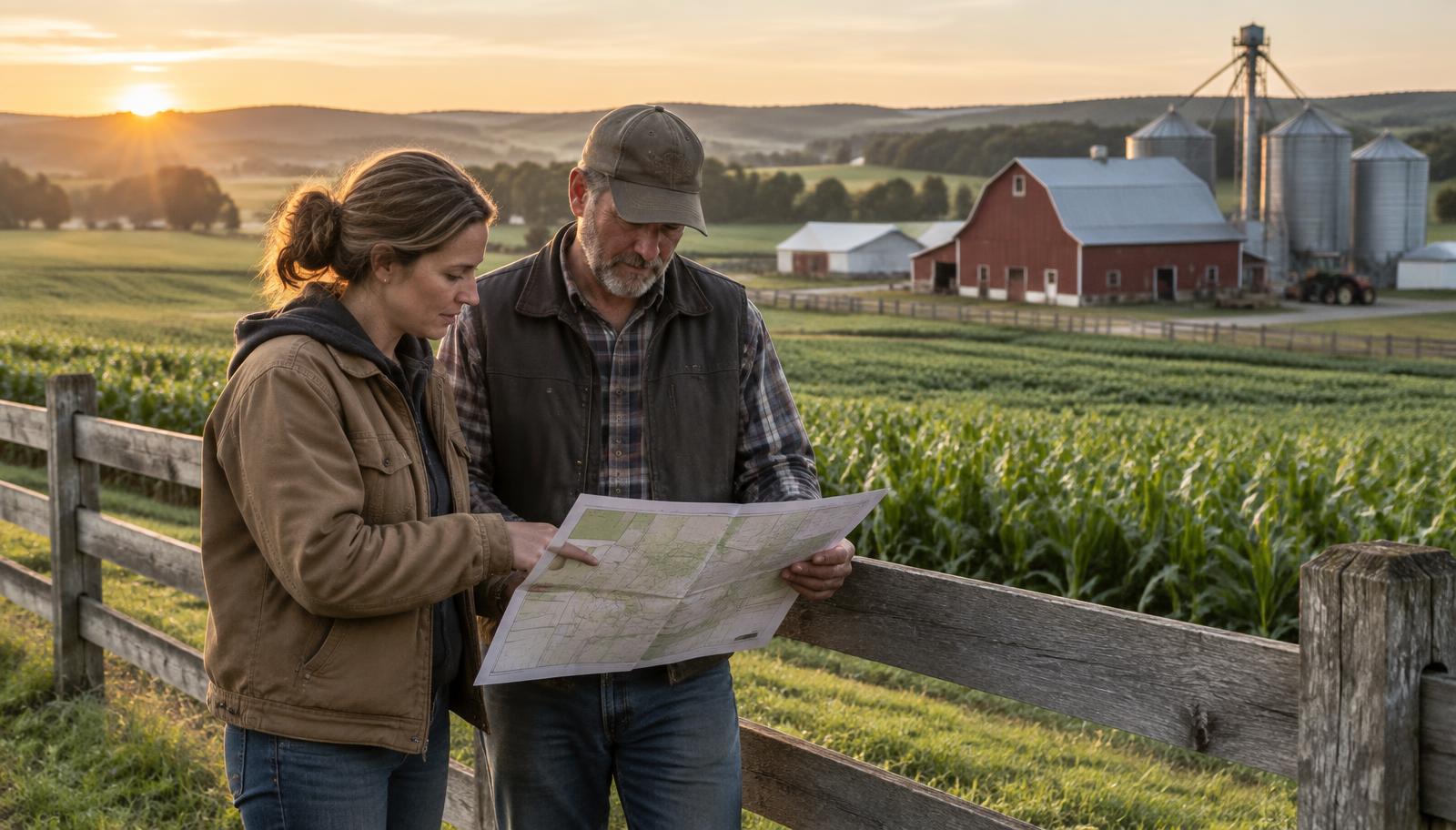
USDA land loans can help farmers, ranchers, and some rural businesses get financing that may not be available through a standard bank loan. But there is no single loan called a USDA land loan. The U.S. Department of Agriculture offers several programs, and each one serves a different need.
One program may help a farmer buy acreage. Another may cover seed, livestock, or equipment. A separate USDA program may help a rural business buy or build a processing plant. Knowing the difference can save time and point you toward the right lender.
What Is a USDA Land Loan?
People often use the term “USDA land loan” for several kinds of farm and rural financing. Many farm loans are handled by the USDA Farm Service Agency, also called FSA. FSA makes some loans directly and guarantees some loans made by approved private lenders.
USDA Rural Development runs a different group of programs. These programs support eligible rural businesses, energy projects, community facilities, water systems, and other forms of rural growth.
The difference matters. A family farmer buying 150 acres may explore an FSA Farm Ownership Loan. A company buying a large food-processing plant may need a USDA Rural Development program instead.
1. FSA Farm Ownership Loans
Farm Ownership Loans are the USDA programs most closely tied to farm real estate. Eligible uses may include buying a farm, adding acreage, improving farm buildings, and making certain soil or water improvements.
Direct Farm Ownership Loans
With a direct loan, FSA provides and services the loan. These loans are generally for eligible family farmers and ranchers who cannot get enough credit elsewhere at reasonable rates and terms. The current direct Farm Ownership limit is $600,000, and repayment can run as long as 40 years. Program limits and rules can change, so check the current terms before applying.
Guaranteed Farm Ownership Loans
With a guaranteed loan, an approved private lender provides the money. FSA guarantees part of the lender’s risk. For fiscal year 2026, the standard maximum for guaranteed Farm Ownership, Operating, and Conservation loans is $2.343 million. The guarantee can reach 95% in certain cases. These limits can change each fiscal year. The lender and FSA still review repayment ability, collateral, credit, and management experience.
2. Options for Beginning Farmers
Buying a first farm can be hard. A new producer may have experience and a solid plan but little land equity or operating history. FSA offers structures aimed at this problem.
Down Payment Program
Under the FSA Down Payment Program, an eligible borrower generally puts down at least 5% of the purchase price. FSA can finance up to 45% of the purchase price or appraised value, subject to a current cap of $300,150. Another lender or the seller finances the rest. This can help a qualified beginning farmer move from leasing land to owning it.
Joint Financing
Joint Financing is also called participation financing. FSA may finance up to 50% of the property cost or value. A lender, state program, or seller provides the rest. Blending these sources can create a workable plan when one loan does not cover the full purchase.
3. FSA Farm Operating Loans
Land is only one cost of farming. Producers also need money for seed, feed, fuel, livestock, equipment, labor, chemicals, insurance, and other farm expenses. FSA offers both direct and guaranteed Operating Loans for eligible needs.
Direct Operating Loans currently go up to $400,000. Because they often pay for short-term needs, their repayment periods are usually shorter than those for farm real estate. Guaranteed Operating Loans are made by approved private lenders with an FSA guarantee.
- Seed, feed, fertilizer, fuel, and other yearly inputs
- Livestock and certain farm equipment
- Some family living and farm operating costs
- Refinancing certain farm-related debts when program rules allow
4. FSA Microloans
Not every farm needs a large loan. FSA Microloans offer a simpler option for certain small farms, beginning farmers, niche producers, and nontraditional operations. Farm Ownership and Operating Microloans are available for eligible uses. The current maximum is $50,000. Farm Ownership Microloans can have terms up to 25 years.
5. USDA Business and Industry Guaranteed Loans
USDA financing also reaches beyond the family farm. The Business and Industry Guaranteed Loan Program, often called B&I, helps approved private lenders finance eligible rural businesses. Possible borrowers include businesses, cooperatives, nonprofits, tribes, public bodies, and certain individual owners.
A B&I loan may support an eligible food processor, manufacturer, storage business, agricultural service company, or other rural business. It is not simply a loan for buying farmland. The business, location, project, and use of funds must meet program rules.
6. OneRD Financing for Larger Rural Projects
USDA Rural Development uses the OneRD framework for four guaranteed-loan programs: Business and Industry, Rural Energy for America, Community Facilities, and Water and Waste Disposal. The right program depends on the project.
For an eligible agribusiness, B&I may help finance a business purchase, rural commercial property, equipment, expansion, working capital tied to the project, or certain construction costs. Examples can include food processing, cold storage, agricultural manufacturing, and other rural commercial facilities.
7. Rural Energy for America Program
The Rural Energy for America Program, or REAP, may help eligible agricultural producers and rural small businesses pay for renewable-energy or energy-efficiency projects. Depending on current funding and rules, projects may include solar systems, efficient heating and cooling, building upgrades, and energy-saving equipment.
REAP is not a general land-purchase loan. Its support is tied to the qualifying energy project.
8. Farm Storage Facility Loans
The Farm Storage Facility Loan program provides low-interest financing for eligible storage and handling facilities and equipment. A producer planning an expansion may use separate loans for land, equipment, operating costs, and storage rather than forcing every expense into one loan.
Direct Loans and Guaranteed Loans Are Different
With a direct loan, a USDA agency provides the funds. With a guaranteed loan, a private lender makes the loan and USDA agrees to cover part of the lender’s loss if the borrower defaults. A guarantee lowers some lender risk, but it does not guarantee approval.
The lender and USDA may review cash flow, credit history, collateral, equity, working capital, management skill, property eligibility, location, loan purpose, and the strength of the business plan.
Which USDA Program Should You Explore?
- Buying or enlarging a working farm: FSA Farm Ownership Loan
- A beginning farmer buying land: FSA Down Payment or Joint Financing
- Seed, feed, livestock, equipment, or yearly farm costs: FSA Operating Loan
- A smaller eligible farm need: FSA Microloan
- Expanding an eligible rural business: USDA Rural Development B&I
- An eligible renewable-energy or efficiency project: REAP
- An eligible crop storage or handling project: Farm Storage Facility Loan
This list is only a starting point. The right choice depends on who is borrowing, where the property is located, how the money will be used, and how the loan will be repaid.
Can USDA Finance Any Rural Property?
No. A property does not qualify just because it is outside a city. FSA programs have rules for the farmer, farm, and loan purpose. Rural Development programs have their own rules for the borrower, location, project, and use of funds.
A working farm, hunting tract, timber property, poultry operation, processing plant, and rural factory may each need a different financing plan. If USDA financing does not fit, a conventional agricultural or specialized land loan may be worth exploring.
What Will a Lender Ask For?
The details vary by program, but every lender must answer one basic question: How will the borrower repay the loan? A clear and complete application helps the lender answer it.
- Personal and business tax returns
- Current balance sheets and income statements
- A full list of existing debts and payments
- Farm production and income history
- A business plan and realistic projections
- Purchase contracts, construction budgets, or equipment quotes
- Information about collateral, equity, and working capital
- Appraisals, environmental reports, or feasibility studies when required
How to Prepare Before You Apply
- Write down exactly what you want to finance and how much it will cost
- Confirm that the property or project is in an eligible area
- Prepare recent financial statements and tax returns
- Explain where loan payments will come from
- Build a realistic budget with room for cost increases
- Ask whether a direct loan, guaranteed loan, or conventional loan is the better fit
- Check current USDA limits and rules before relying on a program
USDA Financing Is a Tool, Not a Shortcut
USDA financing can solve a real funding gap, but it does not replace sound underwriting. A government guarantee cannot make an unworkable project profitable or create cash flow that is not there.
These programs work best when an eligible farmer or rural business has a useful project and a reasonable repayment plan, but needs a loan structure that ordinary financing does not provide.
Finding the Right Financing
FieldService Capital works with farmers, landowners, and rural businesses seeking financing for agricultural real estate and qualifying agribusiness projects. We can help review the request and determine whether a USDA-guaranteed option or another lending structure may fit.
The first step is not choosing a program name. It is understanding the borrower, property, project cost, use of funds, and repayment source. From there, the financing options become much clearer.
FieldService Capital is not the USDA or a government agency. Loan availability, eligibility, terms, guarantees, and approval depend on current USDA rules and lender underwriting. This article is for general education and is not a promise to lend or an offer of credit.